
Building Your Home With Cob
Written by Vince Wheeler
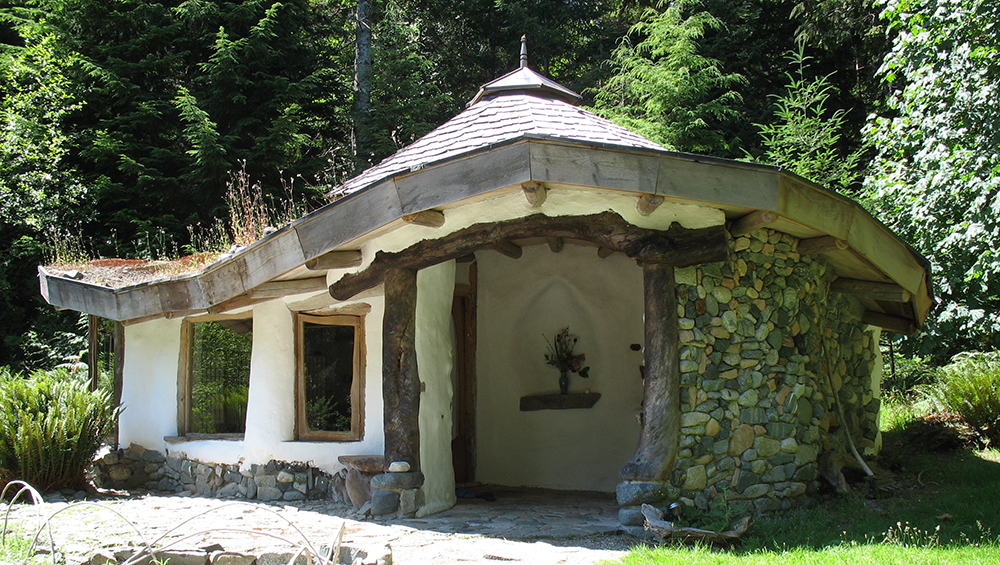
The Secrets To Building A House With Mud
Cob is a word that came from an Old English word for “lump”. Much like adobe, cob is made four basic materials: sand, clay, straw, and water. Cob is an ancient building material that dates back thousands of years. It’s been used to build castles in Europe, farm houses in Great Britain, and homes from Asia to Africa. You can find examples of cob in almost every part of the earth. It has the same basic thermal mass properties that most of the other thermal mass building methods. After mixing those four basic ingredients, cob is a formed into balls roughly the size of a football. Each layer is stacked on top of the previous layer; pressing each layer into the previous layer. Unlikely adobe bricks, cob walls are formed by hand directly where the wall stands.
The Beauty And Natural Shapes Of Cob Buildings
One of the best qualities of cob is the opportunity it gives to create organic forms. The walls can be built with almost any shape or curve you could want, allowing for unmatched artistic design. I’ve seen flower shapes come right out of the wall. Benches and seating areas built into the wall as one solid structure. Windows designed in any shape you could image. Inside the buildings, you can create cubby-holes for shoes, bookcases, even platforms for beds. The stuff is truly amazing. You are quite literally only limited by your imagination and willingness to get to work! One person I found to have a great grasp on the artistic possibilities of cob walls is Kyle from Dancing Rabbit.
Here’s a video showing off his house:
The Cost Of Building With Cob
There are very few materials in the world that allow you to build a house with just about no money. Cob has the potential to do that. I say potential because it does require a few basic ingredient. In most cases, these materials can be found on the property you’re building your home on. In the cases where that isn’t possible, the materials are still affordable and obtainable for most people. I suspect most people will buy the straw. At around $4 a bale, it’s within the reach of anyone’s budget. Should you need sand or clay, that too is affordable. You can have several yards of either delivered to your property for a few hundred dollars. The foundation can be built using a rubble trench and rock foundation. Even though the materials are inexpensive, it does require a lot of labor. When you calculate everything, many people have built their cob homes for less than $10,000. You can have a home of your own without a 30 year mortgage.
Cob As Load-Bearing Walls
If you aren’t familiar with the term “load-bearing”, it refers to the ability of the walls to hold the load of a second floor or a roof. If done correctly, cob will be able to carry the load without any additional lumber or steel. It’s pretty amazing. I can think of few other materials that offer as many benefits as this.
Raise The Roof On A Cob House
Because of the flexibility of cob materials, you can build your roof right into the walls. It’s common to use logs as trusses. You can place those logs onto the wall, shape cob around the log until you reach the top of the log. From there you’ll use a vegas to fill in the space. You can use traditional roofing materials to finish the roof’s surface. There’s also a couple other options.
- The first includes using clay and cactus “slime”. This will require yearly maintenance to keep it from leaking.
- A second option is a live roof. I have more on that in an article I wrote about the whole process.
Final Thoughts On Building With Cob
I love the idea of cob, but there are some concerns. Water leaks within the house can cause major structural damage, depending on how much water leaks and how long that water is allowed to permiate the walls. Another consideration is using the proper lime to do the plaster. Hydrolic lime is required to create a true lime plaster that self-heals micro-cracks and gets stronger with age. Hydraighted lime isn’t the proper lime and causes some issues. I have an article discussing lime and lime plasters you can read here.
Overall, it’s hard to beat the form and beauty cob allows when building your home. The price is basically free. Something you should really consider when building with cob is the labor required to complete your home. This is a physical job and not for those who have serious health issues. For those who do have health issues, something like a strawbale house might be easier and faster. If you think you’re up for the challenge, a cob home offers a lot of advantages. I’m still struggling with using cob, rammed earth, or earthbags to build my home. I’ll narrow that down in the next few months once I pay off the land and get ready to build. Whatever path you choose, I hope this article gave you some things to consider when deciding if cob is right for you!